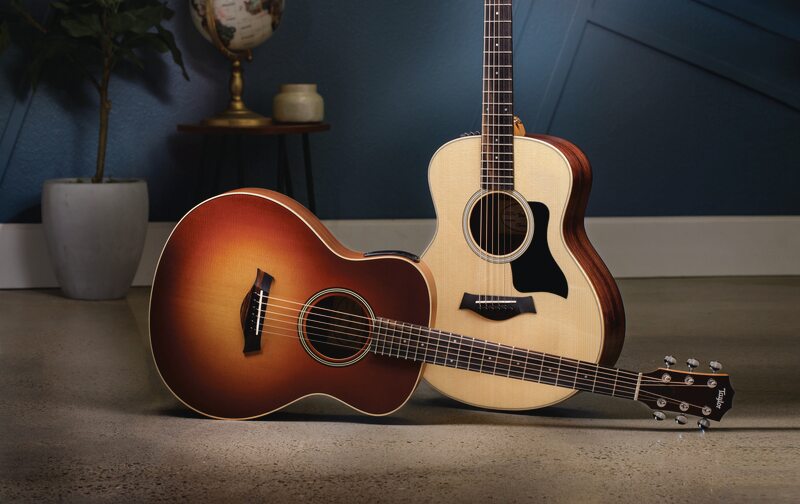
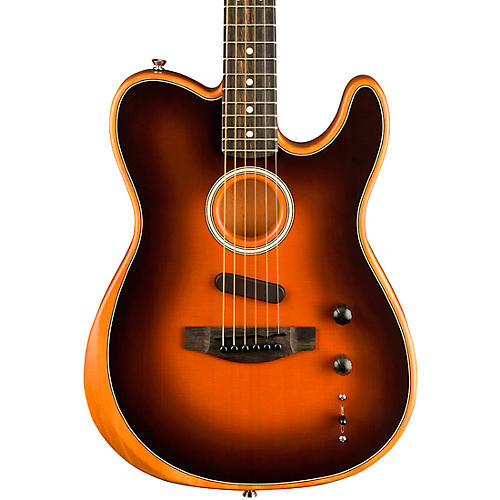
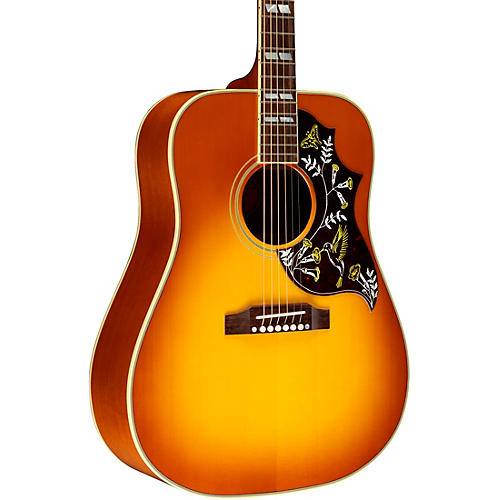
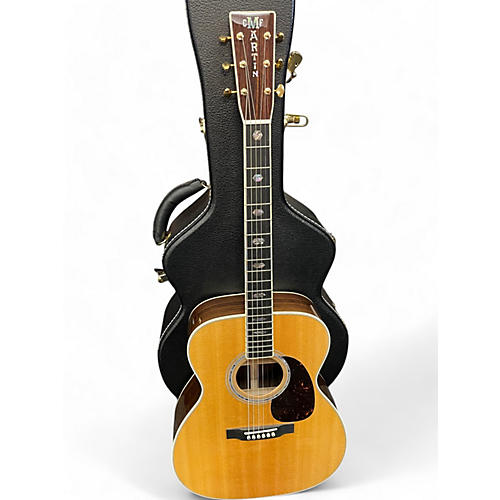
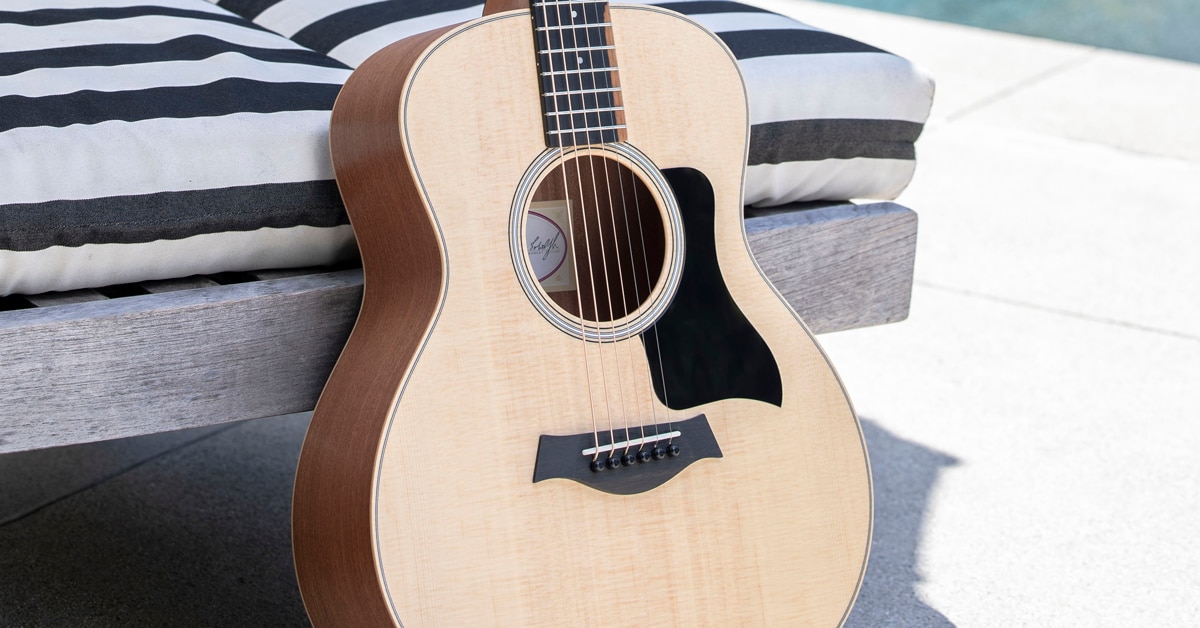
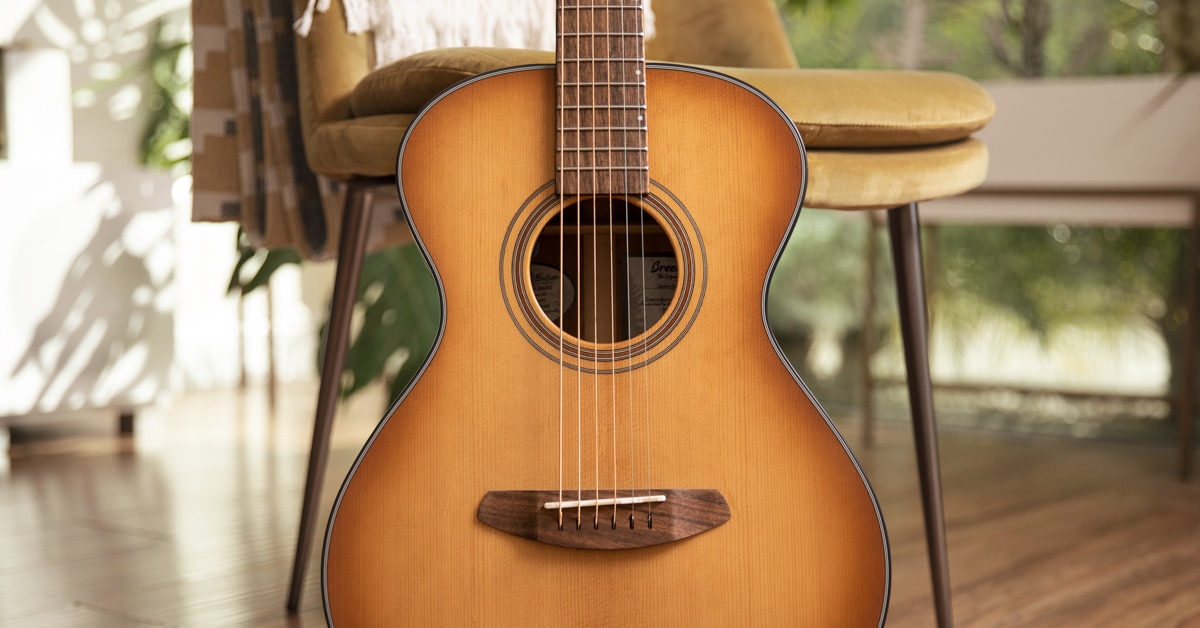
The bright, jangling tones of an acoustic guitar fit in with almost any instrument, sound beautiful on their own and are a perfect accompaniment for the human voice. But where did it come from, and how do you know which is right for you? Musician's Friend has a wide assortment from the biggest acoustic guitar makers around as well as smaller, more niche brands. We've got everything from affordable entry-level starter packs for younger players to highly detailed one-off guitars for gigging professionals and collectors.
A Brief History of the Acoustic Guitar
You may be surprised to know the acoustic guitar's roots go back to Ancient Egypt. A lute was a hollow-bodied wood instrument with multiple strings attached to a soundboard via a thin piece of wood (the bridge). The strings were stretched in a parallel fashion across a soundhole, and wound taut to a peg or post (tuners) atop the neck. The tension of each string was adjusted to create a pattern of frequencies familiar to those who played it.
The lute had a teardrop-shaped soundboard, bowl-shaped body and a sharp bend in the neck. A lutist, much like today's guitarist, strummed or plucked the strings with their fingers or a plectrum (what we call a pick). The sound produced was created by the air being moved around the string vibrations, the vibrations coming off the soundboard, and the air resonating back out from the body chamber through a soundhole. Fingers on the "neck" hand change the pitch of a string by pressing it firmly against specific spots along the neck top (fingerboard).
Though the lute was used through the Baroque era, the inspiration for the name "guitar" showed up back in 13th century Western Europe with the "gittern." Similar in design to the lute, its body was carved out of a single piece of wood and had a smooth or straight neck joint.
In the 15th century, Spain introduced the vihuela, a flat-backed, peanut-shaped design with a less pronounced neck bend and pairs of strings tuned in unison. Roughly 350 years later, Spanish-born guitar maker Antonio Torres Jurado created a larger body design and introduced fan bracing for internal reinforcement. This made what we now call the nylon-string, Spanish or classical guitar, louder with better projection and a cleaner tone.
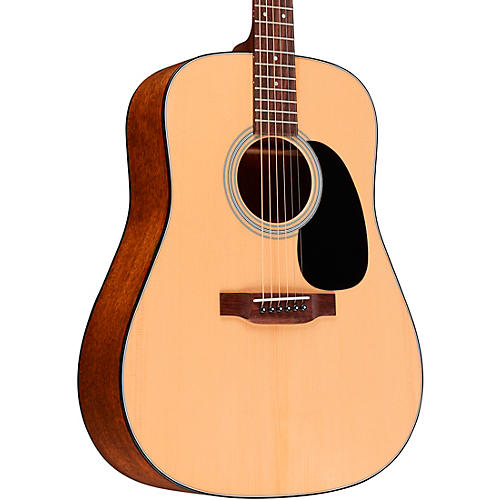
In 1916, C.F. Martin & Company developed the square-shoulder dreadnought acoustic guitar. Named for the large battleships of the time, it was wider, deeper and yielded more volume, with a rich, well-rounded tone. Popular with the folk and bluegrass guitarists of the time, it is still the best-selling acoustic guitar shape today.
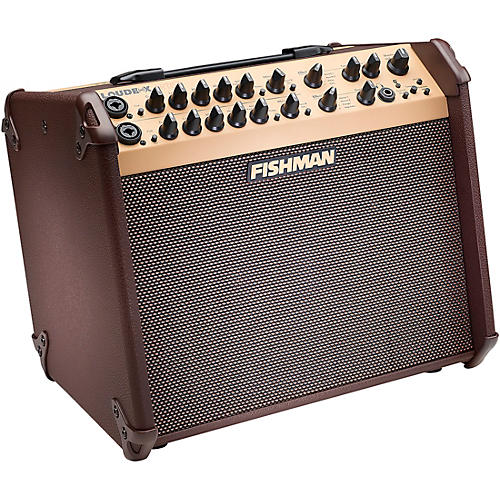
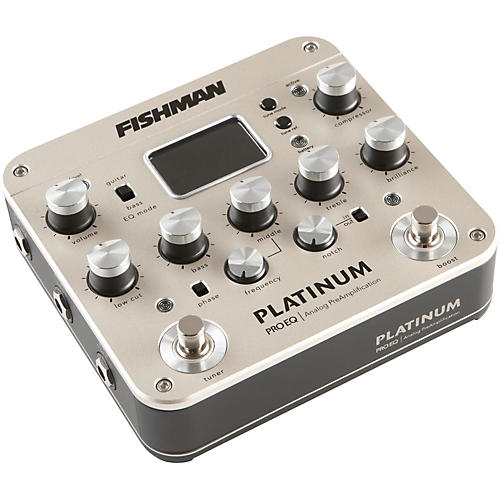
Around that same time, banjo and violin manufacturers experimented with telephone transmitters to amplify the vibrations of the soundboard so guitars could be heard over the louder brass and drum sections of the era's big band setup. As technology evolved, piezoelectric transducers or condenser microphones became the norm for "picking up" the vibrations of the acoustic soundboard. A preamp was added to convert the weak electronic signals from the pickup, giving them a boost and sending them to an or amplifier or speaker. The first preamps were limited to simple treble (higher frequency notes) adjustment. Today's more advanced preamps offer onboard tactile control over volume, dynamic equalization, mic blending, and feedback filters and more. Many also come with a tuner to help ensure better-sounding performance.
Finding the Best Acoustic Guitar for You
Acoustic guitar makers are always working on ways to improve on those early designs with new body shapes, tonewoods, and other visual appointments they hope will garner your attention. Here's how to tell them apart.
Common Acoustic Body Shapes
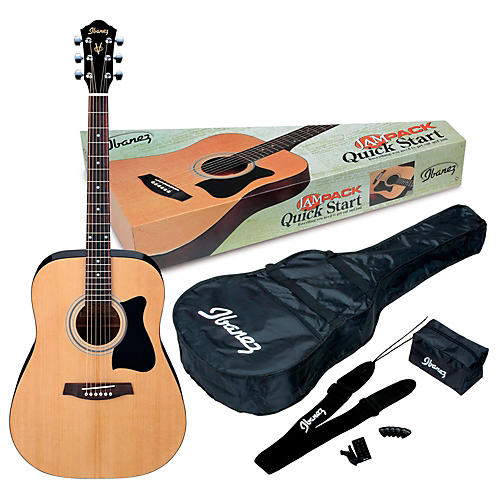
As stated above, the Dreadnought acoustic is king of the steel string. Its versatile design makes it fit in nicely with any musical style. But there are several other shapes to choose from.
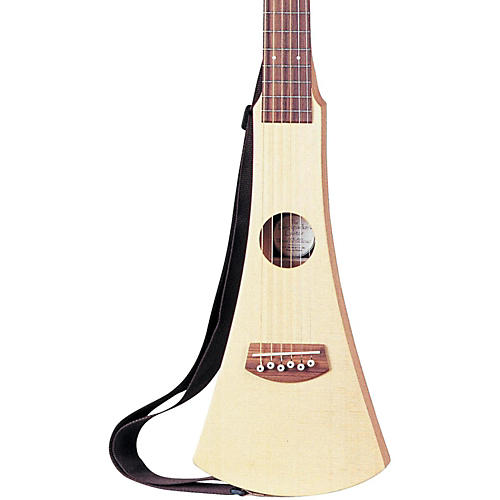
The smallest acoustic guitar, the Parlor is a fingerpicker's dream. They're perfect for travel, practicing anywhere, and a favorite of blues, and indie folk players. With slightly longer bodies, Folk, Concert and Model "O" acoustic guitars offer a more balanced tone with increased bass response, yet remain travel-friendly.
Next up is the Grand Concert ("OO"), which is shaped like a short scale classical guitar with a shallower body, pinched in waist and rounded shoulders. What it lacks in volume, it makes up with better articulation and even-tempered midrange, making them a solid choice for recording. They are also perfect for smaller-handed players.
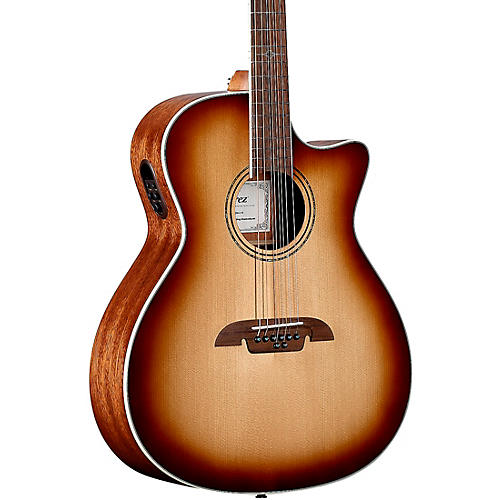
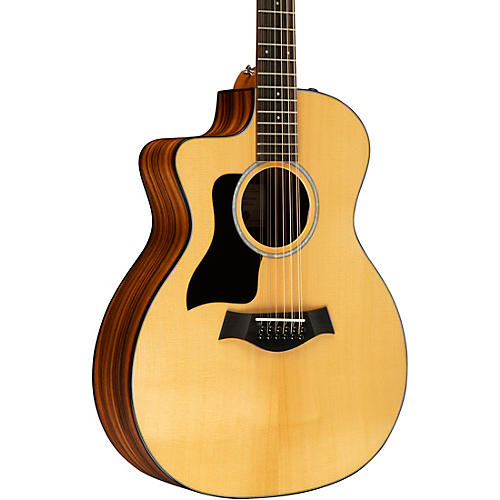
The hourglass figure of the mid-size Orchestra ("OM") or Grand Auditorium ("GA") acoustic guitar offers a good balance of treble and bass, with a well-defined midrange. It’s an excellent all-around option for singer-songwriters with the perfect curve for resting on your leg while sitting. Taylor's Grand Performance models are a GA with a bigger, rounder bottom half (lower bout) for a meatier low-to-midrange.
Finally, there are the Jumbo and Super Jumbo acoustic guitars. Their longer and wider bottom halves, and deeper depth provide more volume and bass for a bolder overall sound. They are ideal for flat-picking strummers wanting to stand out in an ensemble.
Popular Acoustic Guitar Tonewoods
When it comes to tonewood choices for modern acoustic guitar soundboards (tops), spruce is far and away, well, tops. It's like the little black dress. It goes with everything. North American Sitka is the most common, but Adirondack spruce (heavier) and Englemann (lighter) spruce offer similar dynamic ranges, projection and resonance. This makes them ideal for any playing style, from strumming to fingerpicking, with noticeable articulation.
A cedar-topped acoustic guitar gives up some of spruce's top-end sparkle and volume, but adds rich overtones and character to the subtlest passages. It also offers a clean look.
Looking for a vintage acoustic sound right out the box? Try a koa or mahogany top. While not as loud as spruce, mahogany has a strong midrange with some top-end punch, perfect for country music. Koa's sweetspot is in the midrange. Both have a tone that opens up over time the more you play. Usually paired with matching back and sides, these guitars also have naturally beautiful woodgrains.
Though not as common, some acoustic guitar luthiers use maple for the soundboard. It has a flatter sound with minimal delay, so it's less susceptible to feedback during amplified play. As a body wood, it offers warmth and volume, but doesn’t color the tone of the top. Quilted or flamed maple are also gorgeous options.
Rosewood is near the bottom as a top wood, but near the top for the back and sides, especially Indian and Brazilian rosewood. With cedar-like overtones, it has an expanded low end and top end, and a thinner midrange. Much like spruce as a top, it plays well with others.
Also worth noting are walnut, ebony, sapele and ovangkol. The first two are heavier and denser, producing a noticeable top-end shine with a strong bass response that grows richer the more you play. Both are perfect compliments for strummers and flatpickers playing larger-bodied guitars. Sapele and ovangkol are more all-purpose wood types. Sapele adds more treble while ovangkol has a more expansive midrange.
For something completely different, try a carbon fiber acoustic guitar. While traditional guitars can be affected by changes in temperature, this newer design is not.
One final thought on tonewoods; there is a performance difference between a solid tonewood and a layered. Though an acoustic guitar will be more budget-friendly, the layers of wood won't resonate as good as a solid guitar. If you're investing, a solid guitar is the better choice. If you're just starting out, and money is an issue, layered will sound just fine.
Acoustic Guitar Enhancements
Most appointments don't affect performance, but make your guitar more noticeable. Attractive binding (edge trim), purfling (an accent line), pickguards, and inlay designs are commonly made from different woods, abalone, pearloid, mother-of-pearl or plastic. Though more valuable to keeping your guitar tuned, tuners also have different levels of aesthetic appeal.
Acoustic Guitar Finishes
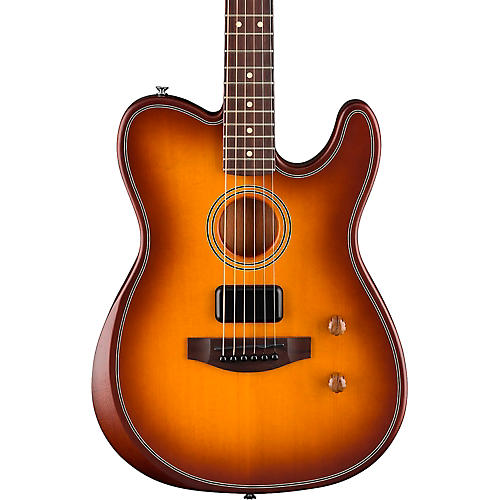
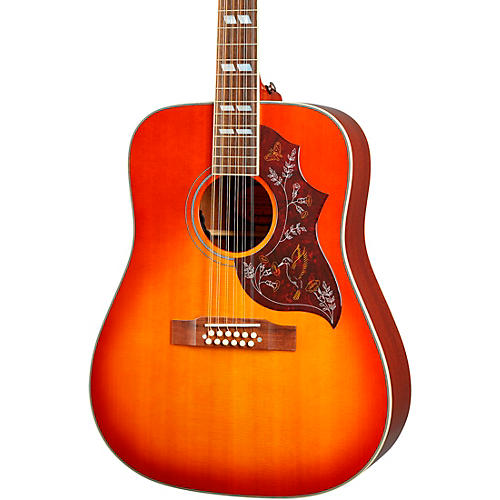
When it comes to acoustic guitar finishes, gloss is the shiniest, satin in between, with matte being the least shiny. A thinner finish is less protective, but allows more of the guitar's natural tone to resonate. If you see "open pore," it means the wood surface's pores weren't filled in before a finish was applied. Aging toners give a guitar a more vintage look, while burst finishes have a two-tone scheme (lighter in the middle, dark near the edges).