







Home Amplifiers & Effects Amplifiers

Amplifiers

(13070 Items)
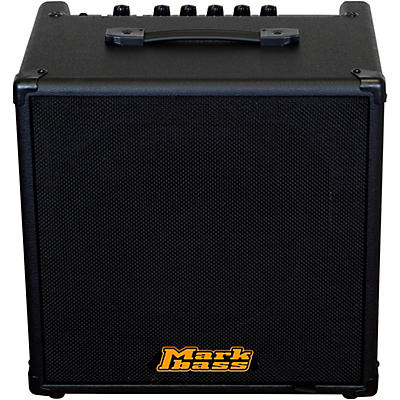
Used Markbass CMD JB Players School 200W 1x15 Bass Combo...
Product Price  $599.99
Excellent Condition
Used Marshall JCM 800 STUDIO Tube Guitar Amp Head
Product Price  $1,199.99
Excellent Condition
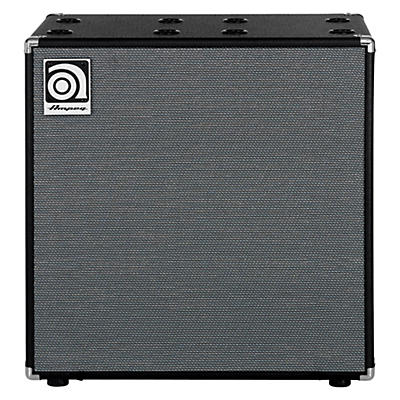
Used Ampeg VB210 Bass Cabinet
Product Price  $749.99
Excellent Condition
Used Milkman Sound The Amp Battery Powered Amp
Product Price  $649.99
Excellent Condition
Used Budda Superdrive 18 Series II Tube Guitar Amp Head
Product Price  $999.99
Excellent Condition
Used Marshall MG100HCFX 100W Solid State Guitar Amp Head
Product Price  $249.99
Excellent Condition
Used 2008 VOX AC30C2 2x12 30W Tube Guitar Combo Amp
Product Price  $1,499.99
Excellent Condition
Used Peavey MAX 100 Bass Combo Amp
Product Price  $279.99
Excellent Condition
Used 2025 Fender 1968 Custom Twin Reverb 85W 2x12 Tube...
Product Price  $1,299.99
Excellent Condition
Used Orange Amplifiers PPC412 240W 4x12 Compact Closed Back...
Product Price  $1,349.99
Excellent Condition
Used Keith Urban 15w guitar amp Guitar Combo Amp
Product Price  $49.99
Excellent Condition
Used Blackstar St James 50 watt 212 Tube Guitar Combo Amp
Product Price  $849.99
Excellent Condition
Used Fender Blues Junior 15W 1x12 Tube Guitar Combo Amp
Product Price  $599.99
Excellent Condition
Used MESA/Boogie Rectifier Badlander 25 Tube Guitar Combo...
Product Price  $1,574.99
Excellent Condition
Used Blackstar HT1RH 1W MKII Tube Guitar Amp Head
Product Price  $229.99
Excellent Condition
Used Soldano 112 Guitar Cabinet
Product Price  $499.99
Excellent Condition
Used Orange Amplifiers AD200B 200W Tube Bass Amp Head
Product Price  $1,699.99
Excellent Condition
Used Fender 1968 Custom Deluxe Reverb 22W 1x12 Tube Guitar...
Product Price  $999.99
Excellent Condition
Used Blackstar Venue Series HT Stage HT-100H 100W Tube...
Product Price  $539.99
Excellent Condition
Used EVH HYPERSONIC FR-12 Guitar Cabinet
Product Price  $574.99
Excellent Condition
Used MESA/Boogie Badlander 100 Tube Guitar Amp Head
Product Price  $1,999.99
Excellent Condition
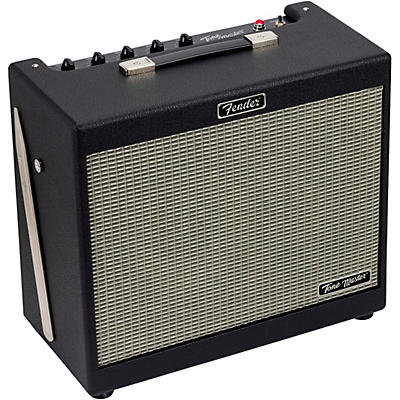
Used Fender Tone Master Twin Reverb 200W 2x12 Guitar Combo...
Product Price  $814.99
Excellent Condition
Used Komet 60HD STACK Guitar Stack
Product Price  $5,500.99
Excellent Condition
Used Trace Elliot Trace 2x12 Pro Road Ready Bass Cabinet
Product Price  $1,149.99
Excellent Condition
Used Trace Elliot Trace 4x10 Pro Road Ready Bass Cabinet
Product Price  $1,149.99
Excellent Condition
Used MESA/Boogie Express 5:25+ 1x12 25W Tube Guitar Combo...
Product Price  $1,249.99
Excellent Condition
Used Gibson Falcon 20 Tube Guitar Combo Amp
Product Price  $1,499.99
Excellent Condition
Used PRS MT15 Head Solid State Guitar Amp Head
Product Price  $469.99
Excellent Condition
Used Fender 68 CUSTOM VIBRO CHAMP REVERB Tube Guitar Combo...
Product Price  $899.99
Excellent Condition
Used Blackstar AMPED 2 Solid State Guitar Amp Head
Product Price  $429.99
Excellent Condition
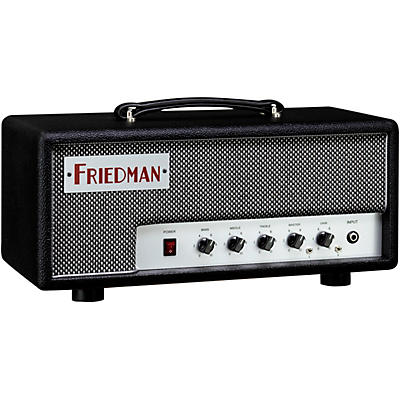
Used Friedman Dirty Shirley 40W 1x12 Tube Guitar Combo Amp
Product Price  $2,099.99
Excellent Condition
Used Orange Amplifiers CR60C Crush Pro 60W 1x12 Guitar...
Product Price  $414.99
Excellent Condition
Used BluGuitar FATCAB Guitar Cabinet
Product Price  $399.99
Excellent Condition
Used Tech 21 FUZZY BRIT Guitar Preamp
Product Price  $149.99
Excellent Condition
Used Bogner Ecstasy 101B 100W Tube Guitar Amp Head
Product Price  $3,699.99
Excellent Condition
Used Bugera BV10001M Veyron MOSFET 2000W Bass Amp Head
Product Price  $329.99
Excellent Condition
Used Albion Amplification TCT50C Tube Guitar Combo Amp
Product Price  $899.99
Excellent Condition
Used Fender Blues Junior Lacquered Tweeds Tube Guitar Combo...
Product Price  $649.99
Excellent Condition
Used Bad Cat BC112X 60 Watt Guitar Cabinet
Product Price  $549.99
Excellent Condition
Used VOX MV50 Rock Guitar Amp Head
Product Price  $179.99
Excellent Condition
Used 3rd Power Amps KITCHEN SINK 6VEL Tube Guitar Amp Head
Product Price  $3,099.99
Excellent Condition
Used Fender PRINCETON TONEMASTER Guitar Combo Amp
Product Price  $989.99
Excellent Condition
Used EVH 5150 III 50W 1x12 Tube Guitar Combo Amp
Product Price  $844.99
Excellent Condition
Used Fender GTX50 Mustang 1X12 Guitar Combo Amp
Product Price  $299.99
Excellent Condition
Used Marshall DSL100H 100W Tube Guitar Amp Head
Product Price  $749.99
Excellent Condition
Used Positive Grid Spark 40 Guitar Cabinet
Product Price  $249.99
Excellent Condition
Used Orange Amplifiers Micro Dark 20W Tube Guitar Amp Head
Product Price  $149.99
Excellent Condition
Used Laney LIONHEART TOM QUAYLE LOUDPEDAL Solid State...
Product Price  $399.99
Excellent Condition
Used Tone King IMPERIAL MKII 20W Tube Guitar Combo Amp
Product Price  $2,199.99
Excellent Condition
Used Universal Audio OX AMP TOP BOX Power Attenuator
Product Price  $859.99
Excellent Condition
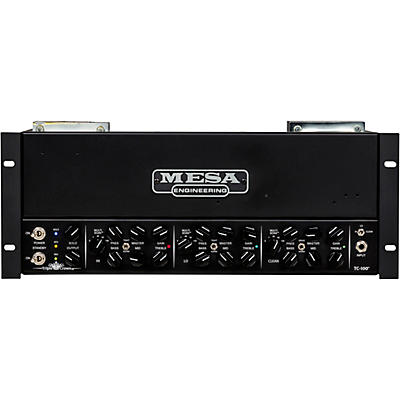
Used 2023 Mesa Boogie TC-100 Tube Guitar Amp Head
Product Price  $1,999.99
Excellent Condition
Used Electro-Harmonix 44 Magnum 44W Guitar Power Amp
Product Price  $109.99
Excellent Condition
Used Mojotone 212 Blackface style cabinet Guitar Cabinet
Product Price  $399.99
Excellent Condition
Used Kustom QUAD 100 HD Tube Guitar Amp Head
Product Price  $279.99
Excellent Condition
Used Fender SUPER REVERB TONEMASTER Guitar Combo Amp
Product Price  $1,099.99
Excellent Condition
Used Hotone Effects Nano Legacy Purple Wind Solid State...
Product Price  $59.99
Excellent Condition
Used Hotone Effects Nano Legacy Mojo Diamond Solid State...
Product Price  $59.99
Excellent Condition
Used Marshall DSL40C 40W 1x12 Tube Guitar Combo Amp
Product Price  $534.99
Excellent Condition
Used 2024 Fender Limited Edition Tolex Blues Junior IV 15W...
Product Price  $699.99
Excellent Condition
Used PRS Archon 50 50W CLASSIC Tube Guitar Amp Head
Product Price  $919.99
Excellent Condition

About Musical Instrument Amplifiers

For electronic instruments, amplifiers are absolutely essential. And they don't just stop there: even an acoustic show can make a really good case for an amp if you're playing a big venue and need to be heard all the way up in the nosebleed section. There are tons of different amplifiers to choose from, so no matter what instrument you play or where you plan to play it, you can find the right hardware here to really bring your performance home. Some of our top brands in this category include: Fender, Acoustic, Bogner, Marshall, SWR, Ampeg, Markbass, Roland, Vox, Orange, and much more.

When we think of amplifiers, the first instruments that pop into our heads are probably the electric guitar and bass — but those are just the beginning. Not only can any electronic instrument use an amp directly, but by simply connecting a microphone, you expand that potential to any instrument at all. This is one reason for all the variety you'll find here: there are guitar and bass amps, of course, but also keyboard amplifiers, electric drum amps and even acoustic models that you can use to amplify practically any instrument. The bottom line is that whenever you want your performance to be heard, there's an amplifier ready to make it happen. Once you start narrowing down the choices here based on your instrument of choice, power needs and preferences, you're sure to discover the amp that's perfect for you.

Tube vs. Solid State Amps

One of the first decisions you should make is whether you're looking for a tube or solid-state amp. There are pros and cons to each. For example, tube amps deliver that iconic sound and response featured on countless albums. Think classic Vox, Marshall, Fender, Orange and more. They also tend to be louder than solid-state varieties, so they’re ideal for both live and studio use. For these reasons, tube amps are most popular with professional musicians and seasoned players. However, as glass tubes bring about those tonal characteristics, they tend to be more fragile, require more maintenance and come at a higher cost. Also, tubes don’t deliver their full tonal flavor unless driven hard, so it can be difficult to play them at those volume levels at home or small gigs.

On the slip side, solid-state amps have bulletproof, consistent performance at all volume levels, so they make for fantastic practice amps. And solid-state amps tend to have more tonal versatility, features and built-in effects, which make for all-in-one, grab-and-go rigs for practice, rehearsals, gigging and studio work alike. Since the circuitry can be condensed, solid-state amps can be incredibly small while delivering stage-level volume.

Bass, drum and keyboard amps tend to be solid-state circuitry, as they deliver a very clean, pure signal, and don’t color the sound as much as a tube amp would.

Some amp companies have taken to combining the two technologies and creating hybrid amps. They generally have a tube preamp, which does most of the tonal coloring (more on that later), paired with a solid-state power amp.

Amplifier Heads vs. Combo Amps

The other main consideration in choosing an amp is to go the route of a head or combo amp. The difference between the two is simple: combo amps have built-in speakers for an all-in-one enclosure, while discrete amplifier heads need to be connected to a separate speaker cabinet for them to produce sound.

Standalone amp heads can be connected directly to mixers or to your choice of speaker cabinet. You can pair any head with any speaker cab with a speaker cable, as long as the impedance (ohm) rating going out of an amp head matches the load of the cabinet(s) it’s feeding into. That means you can mix and match heads and cabinets, including multiple cabs of varying sizes, to find your ideal sound. But it does require added weight, more items to carry and, generally, a higher cost overall. They're great for recording, customizability, and playing huge venues in which a combo just isn't big enough

Combo amps are more convenient, as the amp and speaker cab are joined together in the same box. And, as many combo amps have external speaker outputs, you’re able to use a combo as a standalone unit for practice or rehearsal, and then simply plug into a larger speaker cabinet for live performances, or to just experience different speakers. Where the combo amps do have the advantage, though, is in convenience and portability. You can still get some solid power out of a big combo amp, and with just one unit to bring onto the stage, everything is more straightforward. However, several combos feature a hardwired amp-to-speaker connection, so cabinet swapping isn’t possible. Also, with larger tube combos, the weight of speakers paired with an analog head can get heavy.

Amplifier Wattages and Attenuation

When deciding on what amp best fits your needs, power is a factor. The simple explanation is that more wattage generally equates to louder possible performance. However, not all watts are created equal. In general, Class A and A/B tube watts will be louder than an equivalent figure from a solid-state or Class D amp (which bass amps often are).

There’s no rule written in stone for how powerful an amp should be for a given use. Some guitarists only play through a 100W tube half-stack, regardless of situation, and just use the amp’s volume control. Some players have separate amps each for practice, rehearsal, gigs and studio work — or multiples for each. Some find a Goldilocks middle ground that handles everything.

As tube amps sound best when driven hard, but it’s not possible to turn up that loud in any venue short of a stadium, many companies have taken to including attenuation into the amp itself. In a sense, it’s like driving with the parking brake on. You can get the tube saturation in the tone, but at usable volume levels.

There are also several standalone attenuators from Universal Audio, Fryette, Jet City, Bad Cat and more. Again, these allow you to turn up a tube amp to its tonal “sweet spot,” but not put out more volume than you can use.

Speakers also play a factor, as 1W through a 3” desktop speaker won’t sound nearly as loud or full as that same single watt played through a 4x12”, professional-grade cabinet.

Also, bass frequencies tend to need more power to project like higher-pitched instruments. Therefore, it’s not uncommon to see more than 800W in a bass amp, while guitar amps generally peak around 100W. They’re both incredibly powerful, but it’s not an apples-to-apples comparison.

Preamp vs. Power Amp

Just about every amp head or combo is actually two amps in one — a preamp and a power amp.

The preamp receives the signal from the instrument, amplifies it, alters it (this is where the equalization knobs are located), colors it through its circuitry (as mentioned in the solid-state vs. tube section), and then it pushes the signal into the power amp. The preamp is where most of the amp’s tone comes from, including distortion. The power amp receives the signal from the preamp, amplifies it much further, colors it more (depending on the amp) and then sends it to the speaker(s).

Some rigs have separate pre- and power amps. For example, there are many floor-based, pedal-type preamps for bass and guitar, which serve as the majority of the tone, and feeds into a power amp or powered speaker cabinet (which is a power amp with a speaker cab attached). This offers more versatility, as you’re able to have multiple preamps available for a wide range of tonal options. This is how modeling rigs and multi-effects processors operate, such as those from Line 6, HeadRush and Boss. Plus, companies such as Darkglass, Dunlop, Eden, Tech 21, Moore and many others build standalone stomp-style pedals for electric and acoustic guitars and basses.

Amplifier Effects Loops

Certain effects, such as reverb, delay, chorus and tremolo, sound best when placed in the effects loop of an amp. The “loop” is a feature that many amps have, and is an output from the preamp and a return into the power amp. In other words, your instrument signal would travel from your guitar, bass, keyboard, etc., into the preamp, through the output of the effects loop, into any effects or pedals you want to use, and then back into the return of the effects loop, and off through the power amp.

With amps that have an effects loop, you’re able to bypass the built-in preamp and use a standalone one of your choice by plugging your preamp directly into the effects loop return.

Amplifier Channels

A channel on an amp is, essentially, a tonal path. Most guitar amps have at least two channels, which are usually a “clean” (little to no distortion) and a “dirty” one (crunchy, distorted, etc.). Some have many more for maximum sound variety, while some have only one for tonal purity. For this reason, bass amps often have just one channel, possibly with an overdrive control to add some aggression into the signal.

Amplifiers with Built-in Effects

For decades, amps have featured built-in effects. From the classic Fender reverb and tremolo to today’s digital cornucopia of tonal options, there are countless choices for players of all walks. Most built-in effects tend to do generally light colorations of tone, as the more heavy-handed effects are handled by pedals.

The most common effect to be featured in an amp is reverb. It’s best described as openness and ambiance, similar to how the instrument sounds in an acoustically lively room. There are many, many others that have been built into heads and combos alike, but reverb is essentially the standard effect.

Amplifer Footswitches

Since your hands are occupied while playing your guitar, bass, keyboard, etc., the best way to change your sounds is with a footswitch. It’s exactly what it sounds like — a switch you operate with your foot. Countless amps have footswitchable functions, including changing channels, turning effects (or loops) on and off, attenuation, boost controls, master-volume switching and more.

Some footswitches are built to work with specific amps, while other third-party ones are designed to add functionality to multiple. The three primary types of footswitches are connected via 1/4" TS (Tip-Sleeve aka mono instrument cable), 1/4" TRS (Tip-Ring-Sleeve aka stereo instrument cable) and MIDI. Just make sure to check which works with your amp before making a purchase.

Find the Best Amplifier for You

As there are countless players of electric instruments making music in countless ways, there’s no one amplifier that works for everyone. Whether you want an amp that has all the bells and whistles, or something more streamlined; a massive full stack for huge shows or small combo for bedroom practice; an all-in-one combo or a pieced-together rig — there’s a setup to match your needs. Now, go make some music.